Love Revolution

As with everyone else in the nation, I am saddened and disheartened about what happened at the Boston Marathon yesterday.  Once again, our sense of peace and security has been rocked.  And, I’ve noticed people saying that events such as these are upsetting when they happen, but not really “shocking” any more since it seems like something major like this happens fairly regularly nowadays.

But, on the flip side, I noticed almost immediately people throwing up the Mr. Rogers quote about looking for the “helpers” in the tragedy.  I’ve seen it quoted more times than I can count.  And, it’s a great thought, especially for children and really for all of us.
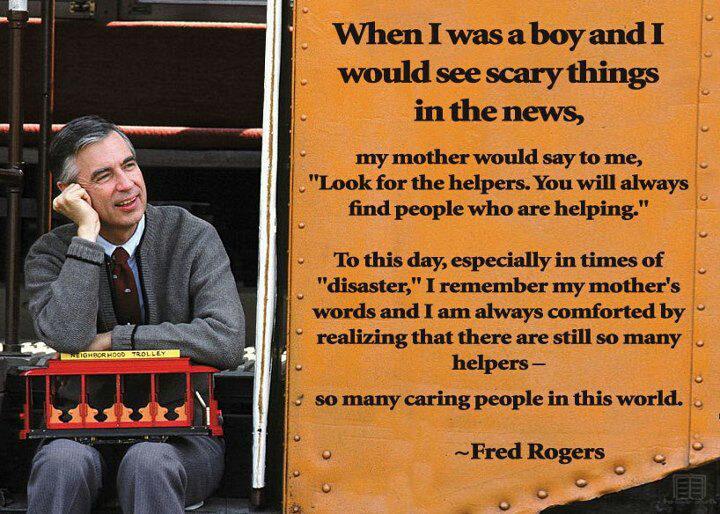
The wisdom of Mr. Rogers

The wisdom of Mr. Rogers

When things like this happen, we first have the shock and awe of graphic pictures and videos on the news and Internet.  Everyone’s emotions get all keyed up as we try to take in exactly what happened and understand the details of the situation.

But, again, it seems more quickly than usual that the stores of heroism and “helpers” have cropped up equally as fast.  From runners finishing the race and running to the hospital to give blood to former NFL players helping others who were hurt to the volunteers of the race who ran towards the blast to strangers taking people in and giving basic first aid right on the scene – the good of people, of a city, of a nation suddenly came out in ways that inspire and move us.

And, this is wonderful.  And, it gives us hope in humanity.  And, it proves that we were made good, not evil; to love, not hate.  It proves that “The light shines in the darkness and the darkness shall not overcome it.” (John 1:5)

John 1:4-5

John 1:4-5

But, why, oh why, does it take a tragedy – a bombing, a school shooting, a natural disaster – to get the best out of us?

Somehow, on a daily basis, we miss the need of our neighbor to be carried, to be comforted, to have the “bleeding” of broken hearts and lives tended to.

We don’t run towards those who are suffering in less obvious ways – from loneliness, fear, being unloved.  We aren’t rocked by the events that are blasting apart families and taking innocent lives.  We walk past those crying, calling out, shell-shocked, who just need someone to see them and care for them in their hour of greatest need.

St. José Maria Escriva said, “If we Christians really lived in accordance with our faith, the greatest revolution of all times would take place.”

This is what our country needs – a revolution.  But not just any revolution.  We need a revolution of Love.  We need to be fighting to out love each other, to see who can do more, give more, who can be pushed to the highest heights of the love we were meant to share.

We’ve proven over and over again when tragedy has struck that we are, indeed, a Christian country, who’s values are firmly planted in the understanding that God IS love and we have a responsibility and innate desire to show that love to others.  But, when will we start living that on a daily basis?  When will we stop waiting for things to get really bad to start doing the most good?

I am praying for the people of Boston.  I am praying for those “helpers” and heroes.  I am praying for those who inflicted this type of pain on innocent people.  But, mostly, I am praying that we, as a nation, as people of God, will not stop here.  I am praying that we will really begin to live our faith and start the revolution of love.  It’s time.

It-Is-Time-For-A-Love-Revolution-7

I am so proud of this blog post!

The kitchen drawer was jammed. When we bought the house, it was in rough shape, but two years of 3 kids pulling and slamming it, packing it full of coloring books, and letting markers drop behind it had done it in for good. It was hanging opening, reams of construction paper half falling out of it when my husband got home from work. He walked past the drawer and tried to push it closed, but it wouldn’t budge, so he leaned on it, wiggled it, and wrestled with it for a whole two minutes before the swearing started.

The crux of his frustration: “These kids don’t take good care of the things they have! We need to figure out how to get them to take pride in our home!” (expletives have been removed)

Stuck in drawer

Although I suppose it’s better for the kids to get the drawer stuck than for the kid to get stuck on the drawer.

Then today, I was talking about this article on the gay marriage debate on Facebook, and a friend commented:

I think we need to start with the notion of pride. It seems like pride is behind every sin. Yet we focus on the idea of pride in our schools, our athletic programs and eventually our careers. The word pride is painted on walls of many of our schools across the nation. I have seen children wearing athletic shirts with the word pride printed across it. We take this for normal. But would we respond the same to any other sin written in our schools or taught to our children? This has become so normal it barely registers a blip. We are setting our children up for spiritual difficulties by doing this.

Her comment got me thinking.  Is pride always a sin?  Does it always come out of a place of darkness and/or lead me into that darkness?

What about if I say I have Catholic pride?  Or that I am proud of myself for finishing my Master’s Degree?  Or that I have pride in my 8 year old son who went to talk with his Den leader “man to man” about the reasons he wanted to quit Cub Scouts instead of letting Mom & Dad take care of it all for him?  Or that I am proud of the teen who talked her friend out of having an abortion?

In my reflections on pride I came across Romans 15:17.

In Christ Jesus, then, I have reason to boast in what pertains to God.

Paul was boasting about what God had done through him.  Being proud of God’s work is not a sin – it is worship.

The Devil cannot create anything new – he can only take what has been created by God to be good and twist and turn it into something ugly.  The fruit of the tree of the knowledge of good and evil was not ugly or bad, but the Devil took the goodness of that tree, the goodness of the free will of Adam and Eve, and twisted and manipulated them into the ugliness of Original Sin.

Paul tells us that pride is good – when it is pride in what God has done.  Sometimes, though the Devil takes that goodness and manipulates it with our insecurities and selfishness and twists into something so ugly it is one of the Deadly Sins.

The Devil is in the details…

When my pride in my home (or car, or boat, or kitchen drawer) is about the object itself, or when I find my own worth defined by that object, it’s a sin.  When my pride is really gratitude to God for the abundant blessings (that I live in a country where I have opportunities, that I have been blessed with the ability to get a job, that that job has blessed me with the money to buy these items), then it is a good and holy pride.

When my pride in my education is about how I feel, how I look, or how others perceive me, it’s a sin.  When my pride is really gratitude to God for blessing me with the intellect, financial means, and opportunity to get an education so that I can better serve Him, then it is holy.

When my pride in my son is about his Den leader thinking I’m a good parent, or about self righteousness in my own parenting decisions, or even about wanting my son to feel better about himself, it’s a sin.  When my pride is really gratitude to God for the chance to pass along life skills that will create my son into a man who will serve God, then it is holy.

When my pride in that teen is about what a great youth minister I have been to encourage her to stand up to the dignity of human life, it’s a sin.  When my pride is gratitude at God working through me and through that teen to save the life of an unborn child, then it is holy.

Pride goeth before a fall…

The line between sin and holiness, between holy pride and the sin of pride is thin and incredibly nuanced.  It’s a short hop from gratitude for my blessings into the idolatry of me.  It’s a quick slip from knowing I have dignity and worth because I’ve been created in God’s image to believing that what other people think of me is what creates my worth.

Maybe I can avoid that slip by changing the words I use.  Instead of telling my son I’m proud of him, I can express the same thing by telling him I saw God working through him.   Instead teaching my kids to take “pride” in our home, I can get the same result by teaching them that our home is a blessing from God.  Instead of having Packer Pride, Loyola Pride, or Hawk Pride, I can be grateful for the community that those institutions have created and show my fellow Packer fans, Master’s graduates, and high school classmates the respect they have earned as individuals created in the image and likeness of God.

There's a difference between being finding your worth in your sexual orientation and letting that identity determine how you relate to God, and finding worth in knowing I am created in the image and likeness of God and letting that identity guide how you choose to live with your sexual identity.

There’s a difference between being finding your worth in your sexual orientation and letting that identity determine how you relate to God, and finding worth in knowing you are created in the image and likeness of God and letting that identity guide how you choose to live with your sexual identity. See…nuanced.

What do you think?  Is pride always a sin?  Can changing our language help us avoid the slippery slope from goodness into sin?

Announce the Resurrection (Don’t Argue It)

Cardinal Dolan was recently asked in an interview who was the most influential person in his life. He answered, “That’s easy. Jesus Christ.” When the reporter said that it had to be someone alive today, Dolan said, “My answer is still Jesus Christ. Jesus Christ is alive.” The Easter resurrection reminds us that Jesus was not a glorious historical figure who left behind a rich tradition of faith, but a presence, a person, who is alive at this very moment.

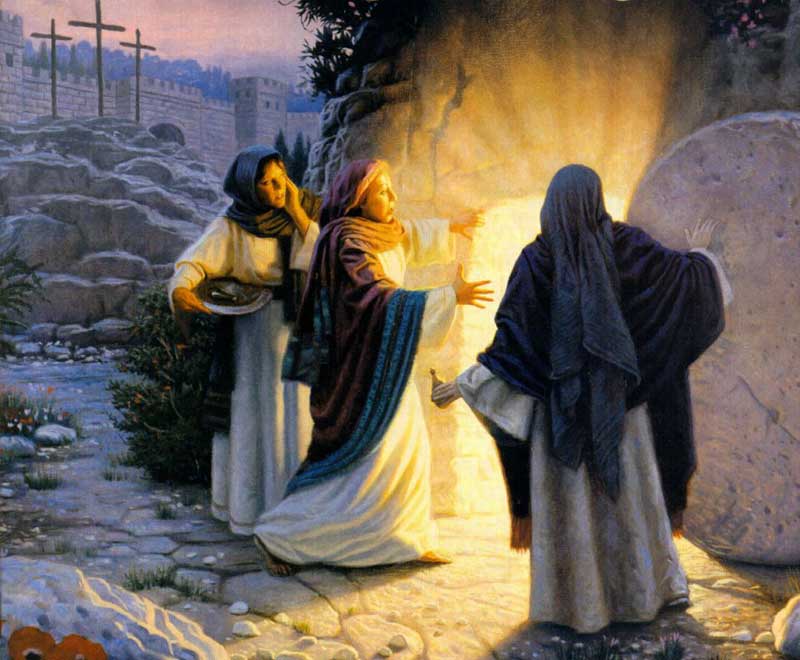
The women who first encounter the reality of Jesus’ resurrection remember his words, and then rush off to share the Good News with the apostles. The apostles do not believe the women. They do not accept their testimony, but notice that when they are faced with this disbelief, with the ridicule of their friends (it “seemed like nonsense”), the women do not engage in lengthy theological debates, they do not argue. They tell their story and their witness stands for itself.

Christ_empty_tomb

They didn’t argue it, they witnessed to it.

Their witness is enough to spark something in Peter. Their story, despite sounding like nonsense, inspires Peter to run to the tomb and experience the reality of the Risen Christ for himself.

People cannot be argued into believing the gospel. Philosophical arguments are not what change hearts. People are not argued into the Christian faith, they are loved, welcomed and invited into it.

We need to proclaim the gospel—not debate it. That is what the women did. That is what Peter did after his encounter. The first disciples did not argue the resurrection; they simply announced it: “This man [Jesus] was handed over to you by God’s set purpose and foreknowledge; and you, with the help of wicked men, put him to death by nailing him to the cross. But God raised him from the dead, freeing him from the agony of death” (Acts 2:23-24). Announce the resurrection—don’t argue it. God wants witnesses, not lawyers.

How will you proclaim the good news of Christ alive today? How can you witness to the Christ’s living presence in your life with the same joy and astonishment of the women who first encountered the empty tomb?

He is Risen, Alleluia, Alleluia!

449px-5267-20080122-jerusalem-tomb-of-jesus

Inside the (empty!) tomb of Christ in the Church of the Holy Sepulchre – Jerusalem.

Originally written for and published in Life Teen Lenten Companion.

The Mass is Long

Not too long ago, I came upon this meme on Facebook….and, boy has it stuck with me.

184265_471342469580992_57879404_n
I’ve read many things written by many saints.  But, this particular sentence hit me right where it hurts.  Not because I don’t love the Mass and not because I would ever leave early because I “had to be somewhere else.”  There is no where I could or would ever need to be that is more important than at Mass.

Sometimes, though, I am internally annoyed because the priest chose the longest Eucharistic prayer.  Or, I roll my eyes at my husband when I see which priest is saying Mass because his homilies are always far longer than I think they should be.  Or, my favorite priest, much as I love him, decides to sing ALL.THE.MASS.PARTS.  Or the choir decides to do an especially long performance type piece a the offeratory.  How quick I am to groan, internally or audibly.

I saw this picture and read these words and I was put in my place.  It’s a short enough sentence that I can’t forget it.  It has stuck with me even though I wasn’t TRYING to get it to stick with me.  It jumps directly into my brain as soon as I start to get impatient with something at Mass or if I’m having a rough time with the kids or I am annoyed with someone sitting nearby with their loud breathing or constant chattering.

It’s no one else’s fault, especially not the priests’, that I lose my patience and focus at Mass.  MY shortness of love is the problem.  And that’s the last kind of love I want to show to my Lord or anyone else.  This week more than ever, I pray that I might enjoy all the “long” Masses and events of Holy Week with an abundance of love.

Our Hope is Too Small: Palm Sunday

As Jesus entered into Jerusalem on that first Palm Sunday, those people were honoring him as a king – as one who would deliver them from the oppression and persecution of the Romans, one who would deliver them from their fears and insecurities. However, Jesus was there to do so much more than that – to offer a deliverance that would surpass the depths of their understanding. On that first Palm Sunday there wasn’t a soul in Jerusalem who understood what Jesus was really up to.

Palm Sunday

On that first Palm Sunday there wasn’t a soul in Jerusalem who understood what Jesus was really up to…and we still don’t get it.

The same is true of us today. Like the crowds of Jerusalem, we often come to Jesus with certain expectations. We want him to calm our fears, overcome our insecurities, heal our addictions, fill our loneliness. The reality is that what Jesus has to offer us goes so much deeper and is so much more fulfilling than anything we could ever think to ask him for.

We ask him to heal one hurting aspect of our lives, but he wipes away every tear from our eye and offers us the promise of a place where there will be no more death, pain, or tears. We ask him to comfort one area of worry, but he offers us peace that surpasses understanding. We ask him to fix one broken relationship, but he makes all things new.

How shocked we are to see that just a few short days later, the same people who were shouting their praise and adoration are now shouting for Pilate to “Crucify him!”

Yet, standing before those same crowds bloodied and broken, Jesus’ desire bring deliverance, comfort, healing, and salvation does not waver. Today we commemorate Jesus’ unflagging determination to rescue people who had no idea the depths of the rescue he was bringing. Hosanna! Let us take time today as we enter into this holiest of weeks to sing shouts of praise and adoration for our Savior who is always doing more for us than we could possibly imagine.

Palm Cross

Sing shouts of  praise and adoration..and make Palm leaf origami!

Originally written for and published in Life Teen Lenten Companion.

The Pope for Everyone

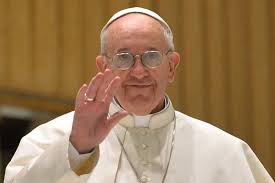
Meet the Pope!

Meet the Pope!

The Church as a whole has seemed overjoyed and hanging on every move of our gutsy new Pope, Francis. The fever ran high immediately: a Jesuit Pope? Just earlier that day I was having a conversation with someone about how there’ll never be a Jesuit Pope. Maybe not never, but not in my lifetime, that was I oh so convinced of. And then he chose the name Francis – it took a while to really get an answer about which St. Francis he was taking the name from – there are 3 pretty big name St. Francises (is that really the plural of Francis?) in our Church history. It came out later that he chose it after Francis of Assisi, for his love of the poor.

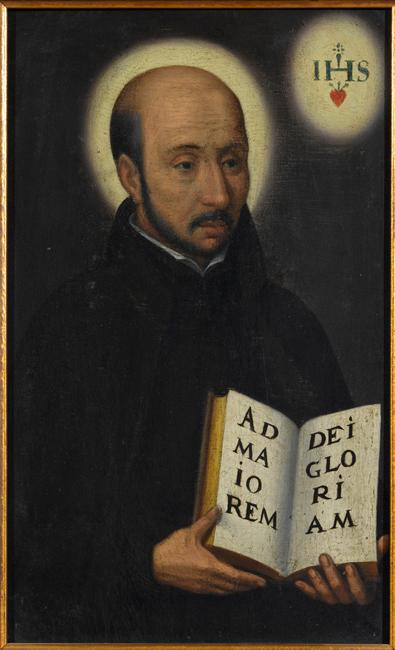
St. Ignatius of Loyola gave Jesuits 2 mottos: "for the greater glory of God" and "sinners yet called"

St. Ignatius of Loyola gave Jesuits 2 mottos: “for the greater glory of God” and “sinners yet called”

On top of all of that, he is an American pope – not from the USA, as we so easily think of America, but very clearly, he is a Pope from the Americas. And yet, his family has Italian roots – returning the Papacy to where it had been for hundreds of years prior to Blessed John Paul II.

Ok, so we’ve got an Italian and an American Pope, a Jesuit who took the name Francis.

Everyone got this guy figured out yet? Me neither. And my guess is, the second you think you’ve got Pope Francis figured out, you’re just begging to be proven wrong. Read More

Retired Presbyterian pastor: How I became a Catholic

Below is a link to an interview with a former Presbyterian pastor who decided to convert to Catholicism.  This is from the great state of Alabama, where the population is 2% Catholic.  So, this is kind of a big deal.  And, for it to be covered by our major news outlets is an even bigger deal.

Mr. McCrummen gives some fantastic and thought-provoking answers to very tough questions, presumably asked by a non-Catholic interviewer (though, i honestly don’t know).  Definitely a great read and one that would be worth sharing with Protestant friends who have questions about the Catholic church or those who are actively pursuing it.

Retired Presbyterian pastor Norman McCrummen: How I became a Catholic

Saying Goodbye to My Papa

It’s odd saying goodbye to a pope who hasn’t died.  But, saying goodbye to this pope in particular is very personal to me.  It seems that Pope Benedict and I have run a course of ironic similarity over the past nearly 8 years.

Don’t worry.  I don’t consider myself papal or even close to the holiness and greatness that is our former Holy Father.  However, as my husband and I were discussing all of this and making our predictions about who might be elected next (and, calculating that there will probably be at least 2 more popes in our lifetime), I realized that good ol’ Benny and I have some major things in common.
Read More

The Converted Person

A small excerpt from the book Show me the Way: Daily Lenten Readings by Henri J.M. Nouwen that really spoke to me.  Emphasis added.  I hope you enjoy.

51e4wDh-mqL._SL500_AA300_
“The converted person does not say that nothing matters any more, but that everything that IS happens in God and that God is the dwelling place where we come to know the true order of things.  Instead of saying: ‘Nothing matters any more, since I know that God exists,’ the converted person says: ‘All is now clothed in divine light and therefore nothing can be unimportant.’  Converted persons see, hear, and understand with a divine eye, a divine ear, a divine heart.  Converted persons know themselves and all the world in God.  Converted persons are where God is, and from that place everything matters: giving water, clothing the naked, working for a new world order, saying a prayer, smiling at a child, reading a book, and sleeping in peace.

All has become different while all remains the same.”

Relevance or Truth? (circle one)

I usually love Bad Catholic Marc Barnes’ blog. I love how he is able to be smart and witty at the same time and that he writes at above a 7th grade level (while most blogs seem to fall below that mark).  On many days, I agree with him 100% and can point people to his writing and say, “Read this!  He speaks for me – and does it much more eloquently than I!”

Today is not one of those days.

In his typically eloquent response to a horrid opinion piece in the Washington Post called The church young Catholics want, I think Marc misses the mark.  In the WaPo piece, the author demands that the Catholic church become relevant to the youth today, and in her opinion, relevance means toeing the cultural line on issues like homosexuality, abortion, contraception, and women’s ordination.

Marc argues

Relevance is the worst factor for determining the goodness of a thing since we dunked witches in the river to see whether they’d float.

After railing against youth ministry that uses skits, contemporary Christian music, and social media, Marc concludes:

Kill relevance, seek transcendence.

While I think Marc is absolutely right to rail against “relevance” to the exclusion of everything else – including the Truth – I think his piece is missing something.

This is not an either/or situation, but a both/and.

We do not have to reject true relevance that goes where youth are.  And yes, social media IS where they are.

We do not have to reject relevance that speaks to their life experiences.  From the very real experiences of suffering, sin, and grace they encounter as youth to the real experience of listening to One Direction and texting during class.

We do not have to reject relevance that speaks their language.   The only way they can learn the rich vocabulary of theology and ecclesiology in the Church is if we help them translate it.

The combox kills again

I think what Marc is trying to say is that people who do crappy youth ministry, who water down the Truth in favor of a pandering, cheesy theology, and who do it all in the name of “relevance” are missing the boat because their watered down, effeminate, pansy gospel is actually irrelevant.

Unfortunately, if that is what he is trying to say, the message is lost.  If he’s arguing for both relevance and the Transcendental, if he’s arguing for us to consecrate (as we are called to do by virtue of our common priesthood) the world in which these youth live instead of condemn it, if he’s arguing for us to just be more cautious in our use of the secular and to temper our desire to be relevant with good, solid catechesis and sharing of the Truth, then I’m not the only one who missed it – so did most of the commenters in his combox.

I’m fifteen, and “happy happy joy joy” Christianity just ticks me off. In an attempt to be hip and cool, all formality, reverence, and beauty is muffled.

I don’t want relevance, I want reverence!

From her article: “We do not need answers; we need to engage the world.” False. They need solid catechesis and sufficient explanation.

If I wanted a church that was “with the times” and “relevant” I would become one of those non-denominational hipster Christians.

Relevance AND Truth

The Gospel can be shared in a way that is relevant without being watered-down.

Good youth ministry can catechize and still include skits, and even KLove on occasion.

Good youth ministry can be on Facebook, Twitter, and Instagram, and can evangelize in those places and teach the teens to be evangelize there as well.

Good youth ministry is first and foremost about sharing the Truth with them, but it also must be relevant.

After all, Jesus showed us over and over again how to be relevant without losing the beauty of the Truth.  He started where the people were (oftentimes in the midst of sin and in sinful places), they used the life experiences of the people to teach (parables of shepherds and farming) and to share the truth.

On the road to Emmaus Jesus walked with those two disciples (they were going the wrong way), asked questions, and really listened to them before he spoke a single word of Truth to them. And when he did speak Truth, he answered the questions they had, and spoke a language they understood – he was relevant.

What do you think?  How can we better balance the need to be relevant while at the same time sharing Truth and allowing them to opportunity to experience and reflect on the Transcendental?